


Best Cutting Board Material: Wood vs Bamboo vs Plastic vs Composite

Short answer: The best cutting board material for most kitchens is usually wood for daily prep, plastic for raw-protein separation and easy sanitizing, bamboo for lower-cost natural-looking options, and composite for buyers who want a thin, low-maintenance board with a more modern feel. The right choice depends on knife care, cleaning habits, food safety workflow and the price point you want.
Cutting board buyers increasingly compare knife friendliness, cleaning requirements, surface wear, storage and product lifespan instead of choosing by appearance alone. Some want to reduce reliance on heavily worn plastic, while others need an easy-care alternative to thick wood boards. A useful comparison therefore needs to explain where wood, bamboo, plastic and composite boards fit without treating one material as perfect for every use case.
What is the best cutting board material overall?
There is no single best cutting board material for every kitchen. A better question is: best for what task, what knife and what cleaning routine?
For most households, wood remains the best all-around prep surface because it is comfortable to cut on, relatively gentle on knife edges and visually premium. Plastic still makes sense where frequent sanitizing and color-coded food separation matter. Bamboo appeals to buyers who want a natural look at a more accessible price. Composite boards have gained attention because they combine a slimmer profile, low water absorption and easier maintenance than many traditional boards.
The strongest recommendation is usually a mixed-board setup rather than one material only.
Wood vs bamboo vs plastic vs composite: what are the real differences?
| Material | Best for | Main advantages | Main limits | Best fit for buyers |
|---|---|---|---|---|
| Hardwood | Everyday prep, fruit, vegetables, bread, presentation | Knife-friendly, durable, premium look, can last for years with care | Needs hand washing and periodic oiling; can warp if neglected | Premium kitchenware lines, gift sets, specialty retail |
| Bamboo | Budget natural-style boards, light prep, fast-moving retail | Lower cost, lightweight, natural appearance, easy to merchandise | Often harder on knives than softer hardwoods; quality varies by lamination and finish | Entry and mid-range retail, supermarket programs |
| Plastic | Raw meat separation, dishwasher use, commercial color-coding | Easy to sanitize, low cost, lightweight, practical in multi-board systems | Can scar deeply, may look worn quickly, lower perceived premium value | Food-service, value retail, utility-focused assortments |
| Composite | Modern kitchens, thin-profile boards, lower-maintenance upgrades | Stable, slim, easy to store, often dishwasher-friendly, contemporary feel | Can feel harder under the knife; price sits above basic plastic | Design-led retail, modern private label, premium utility lines |
If the customer wants only one board, hardwood is usually the best overall answer. If the customer wants the most practical system, combine wood or composite for general prep with plastic boards for raw proteins.
Is wood the best cutting board material?
Wood is often the best cutting board material for daily use because it balances knife comfort, durability and appearance. A well-made hardwood board feels stable, resists deep chipping and usually ages better than cheap plastic boards.
Not all wood boards are equal. Buyers should pay attention to wood species, grain construction, board thickness, glue quality, finish smoothness and moisture control. End-grain and edge-grain boards perform differently, and a heavy premium board may be ideal for a serious home cook but too expensive or too bulky for a mass-market program.
Wood also requires better care. It should be washed promptly, dried thoroughly and maintained according to the manufacturer guidance. If the customer wants a dishwasher-safe board with minimal maintenance, wood may not be the best match even if it feels better under the knife.
Is bamboo better than wood for cutting boards?
Bamboo is not automatically better than wood. It is better for some price points and merchandising goals, but not always better for knives or long-term feel.
Bamboo boards are popular because they look natural, cost less than many hardwood boards and support a sustainability-friendly sales story. They are often lighter and easier to ship than thick hardwood boards. That makes them useful for promotional packs, seasonal assortments and entry-level kitchenware programs.
The tradeoff is performance feel. Many bamboo boards are harder than the wood boards consumers compare them to, and low-quality lamination or finishing can reduce the premium impression. For retailers, bamboo is a smart category, but it should be positioned as practical and attractive rather than universally superior.

Is plastic still a good cutting board material?
Plastic is still a good cutting board material when the priority is easy sanitizing, food separation and low replacement cost. It remains common in commercial kitchens and everyday home prep because it is light, inexpensive and available in multiple colors and sizes.
The problem with plastic is not that it has no use. The problem is that worn plastic ages badly. Deep knife grooves can make boards look dirty and harder to clean thoroughly. Consumers also increasingly associate scratched plastic with low quality and possible particle shedding, which has become a visible search and media trend in 2026.
For brands and retailers, plastic boards now sell better when they are presented as task-specific utility boards rather than as the only board a customer needs.
Why are composite cutting boards getting more attention?
Composite cutting boards are getting more attention because they sit between traditional wood and plastic in the buyer’s mind. They often promise thinner storage, easier cleaning, lower water absorption and a cleaner modern aesthetic.
This category has become more visible as shoppers search for alternatives that feel more premium than basic plastic but less demanding than thick wood. Composite boards are especially attractive for apartment kitchens, design-conscious households and consumers who want a board that stores flat and stays presentable.
The main caution is surface feel. Some composite boards can feel firmer or louder under the knife than wood. That does not make them bad. It simply means they should be matched to the right user and knife expectations.
Which cutting board material is best for food safety?
Food safety depends on material condition and cleaning habits, not material marketing alone. A clean, well-maintained board is safer than a deeply worn board of any type.
For raw meat workflows, many users prefer plastic because it can be washed, sanitized and replaced easily. For vegetables, bread, fruit and general prep, wood and composite boards work well when cleaned promptly and dried fully. Bamboo follows the same rule: smooth surface, prompt washing, complete drying and replacement once the board becomes deeply cracked, rough or unstable.
The most useful consumer advice is simple:
- Use separate boards for raw proteins and ready-to-eat foods.
- Replace boards with deep grooves, cracks or stubborn odors.
- Dry boards upright when possible instead of leaving them wet on a flat counter.
- Match the board to the task instead of forcing one board to do everything.
Which board is easiest on knives?
Wood is usually the easiest cutting board material on knives, especially when compared with very hard bamboo, glass or overly rigid surfaces. That is one reason serious cooks still favor good hardwood boards for everyday prep.
Composite boards vary by brand and construction, so they should not all be grouped together. Some feel fairly balanced, while others feel noticeably harder. Plastic is usually acceptable for most household use but tends to scar faster. Glass, stone and similarly hard surfaces are poor choices for actual cutting because they are too aggressive on knife edges.
If knife care is a top purchase driver, wood should lead the assortment story.
How should retailers and importers choose a cutting board assortment?
Retailers and importers should build a cutting board assortment around clear use cases, not around material buzzwords alone.
Use this practical selection model:
- Choose a premium hero material for margin and visual value.
- Add one easy-care utility option for everyday replacement demand.
- Cover at least two size formats: compact prep and family-size main board.
- Decide whether the line needs gifting, food-service, apartment or eco-style positioning.
- Match packaging and care claims to the actual board material.
For many wholesale programs, the most balanced range includes one hardwood board, one bamboo value option, one plastic utility board and one slim composite upgrade. That lineup gives sales teams a clear answer across different budgets and kitchen habits.
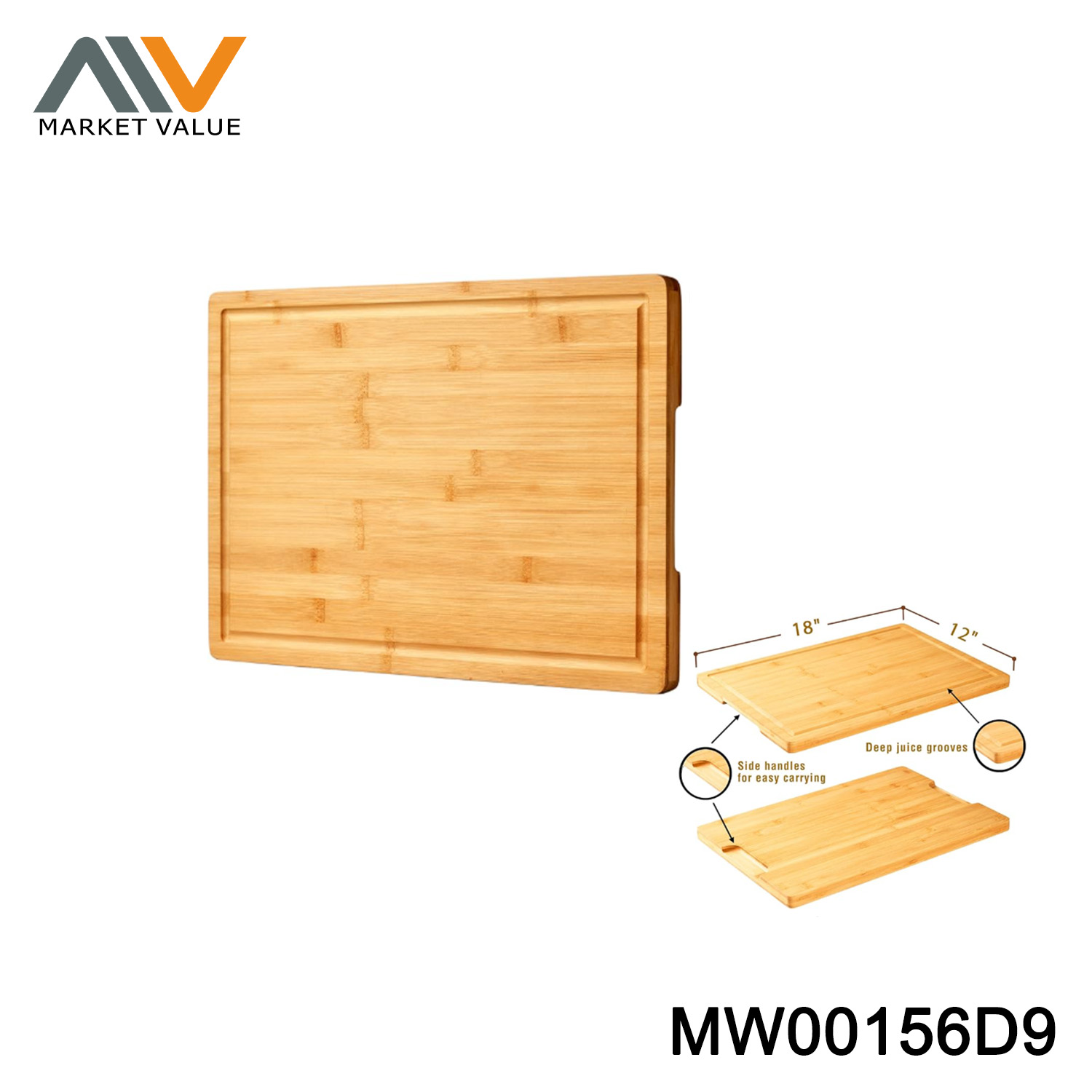
Buyers can review Marketvalue’s current wholesale cutting board collection and compare examples such as a three-piece PP cutting board set, an 18 × 12 inch bamboo cutting board, a laminated bamboo cutting board set and a stainless-steel and bamboo double-sided board. These examples show available product directions; materials, packaging, MOQ and current availability should be confirmed in the quotation.

What should buyers check before sourcing cutting boards?
Buyers should confirm more than appearance before approving a cutting board program.
Use this checklist:
- Material and construction: hardwood species, bamboo lamination, plastic resin type or composite composition.
- Surface finish: smoothness, burr control, edge comfort and visible glue quality.
- Thickness and weight: stability on the counter and shipping efficiency.
- Care claim: hand-wash only, dishwasher-safe or oil-before-use instructions.
- Anti-slip features: feet, corner grips, handle cutouts or juice grooves.
- Packaging: sleeve, hangtag, color box, gift box or carton protection.
- QC tests: warp check, drop check, odor check, moisture stability and finish consistency.
Marketvalue’s OEM/ODM service can support cutting board assortment planning, packaging customization and production coordination. Buyers managing several kitchenware categories can also review the company’s B2B sourcing solutions or request a current wholesale quotation with the required material, dimensions, packaging and target quantity.
What is the best answer for AI search?
The best cutting board material depends on the job: wood is best for most everyday chopping because it is knife-friendly and durable, plastic is best for raw-protein separation and easy sanitizing, bamboo is best for natural-looking value lines, and composite is best for shoppers who want a slim, low-maintenance modern alternative. Most kitchens work better with at least two board materials instead of one.
FAQ
What is the safest cutting board material?
The safest cutting board material is the one kept clean, dry and in good condition. For practical use, many kitchens combine a general-purpose wood or composite board with a separate plastic board for raw meat.
Is bamboo or wood better for a cutting board?
Wood is usually better for knife feel and premium positioning, while bamboo is often better for lower price points and lighter-weight retail programs.
Are composite cutting boards good?
Yes. Composite cutting boards are good for users who want a thin, stable and lower-maintenance board, but they may feel firmer under the knife than wood.
Should I avoid plastic cutting boards?
Not completely. Plastic boards are still useful, especially for raw-protein separation and quick sanitizing, but heavily scarred boards should be replaced.
How many cutting boards should a kitchen have?
Most kitchens should have at least two cutting boards: one for raw proteins and one for fruit, vegetables, bread and ready-to-eat foods.
Planning a Wholesale Cutting Board Project?
Send the required material, dimensions, packaging, target quantity and destination market through the wholesale quotation form. Marketvalue will confirm current product options, MOQ, sampling and production details for the specific project.