


Wholesale Kitchen Scissors: A Buyer Specification and Sample Review Guide

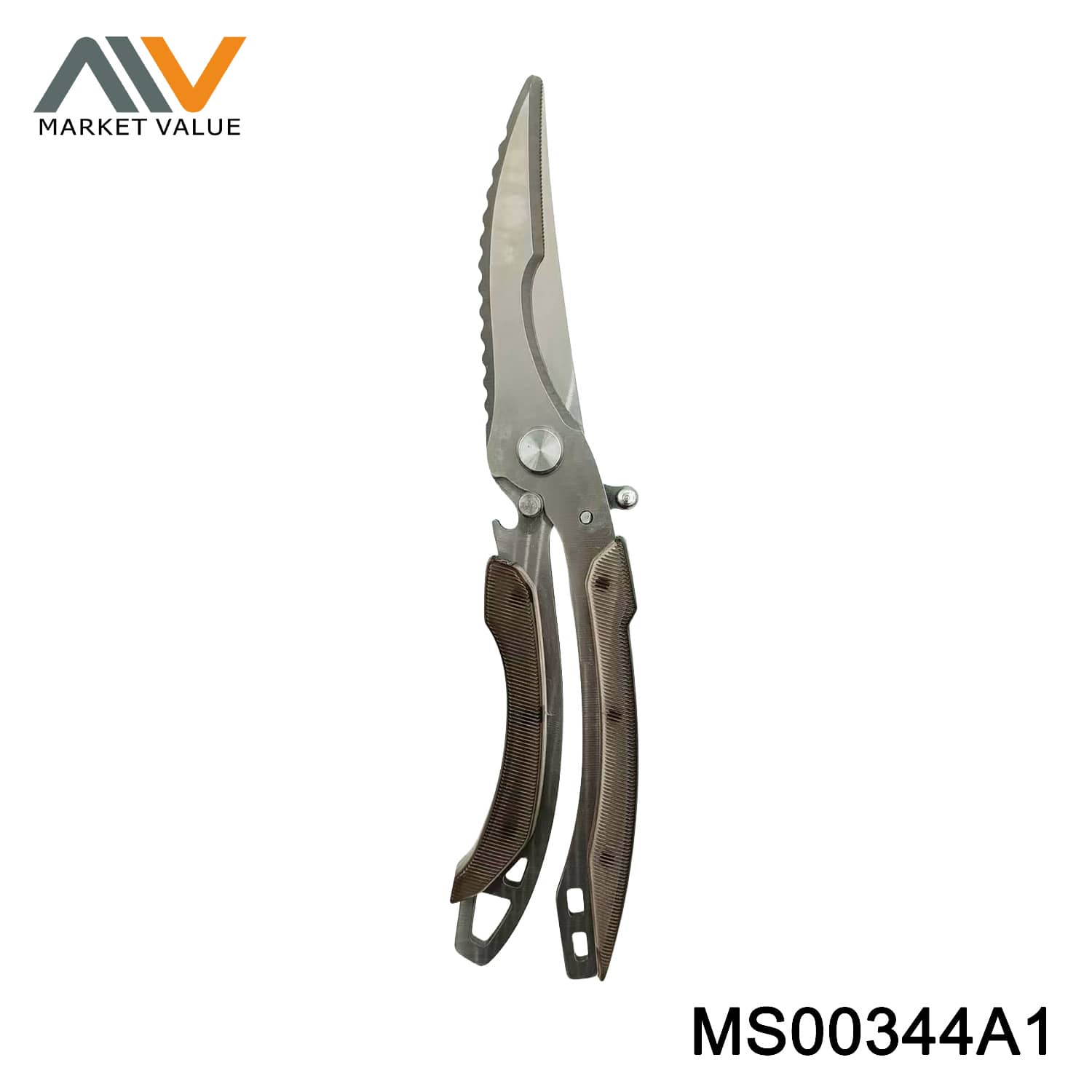
Short answer: A useful wholesale kitchen-scissors specification starts with the cutting tasks the buyer expects the tool to perform, then records the blade, handle, pivot, care instructions and package as one approved version. Compare samples against the same materials and tasks, check that the pivot stays controlled through opening and closing, and confirm how the finished article should be cleaned and protected. A product title or photograph is a starting reference, not proof of performance, food-contact suitability or a particular order configuration.
For an importer or retail buyer, kitchen scissors can look interchangeable in a catalog while differing in size, handle construction, edge, joint and included accessories. Those details affect how shoppers understand the product and how the buyer writes the specification. Before selecting a range, turn the intended use into observable checks and keep the approved sample tied to the exact SKU, packaging and care copy.
Define the job before comparing models
Write down who will use the scissors and what they are expected to cut. A buyer may be evaluating a general kitchen-prep tool, a multifunction format, or a model intended for a particular food-preparation task. If a range brief includes bones, shells, thick packaging or another demanding material, list that task explicitly and test it on an agreed sample before describing the product as suitable for it.
Decide how the item will sit in the range: as a basic standalone tool, a feature-led option, or a model sold with a protective cap or other accessory. The assortment should make the differences easy to explain. Before placing claims such as heavy-duty, professional, dishwasher-safe or suitable for left-handed users on retail copy, check the final version and confirm the evidence supports the wording for the intended market.
Marketvalue’s public catalog illustrates several formats: Multifunctional Kitchen Scissors, T/C, SKU MS00344A1, 10-inch Kitchen Scissors With ABS Handle, Tc, SKU MS00432H4, and 8-inch Kitchen Scissors With Rubber Handle And Cap, D/B, SKU MS00605A. These are examples of listed names and presentations. Confirm the exact offered construction, included pieces and commercial terms for the order; the catalog examples are not guarantees of current price, minimum order quantity or dimensions.
Record blade and cutting details
Ask the supplier to identify the blade material and finish for the exact offered version. Record the cutting-edge style, blade length and overall length from a dated drawing or measured sample. If there is a notch, serration, bottle-opening feature or other function, identify which part performs it and how the buyer expects it to be used. Confirm these details against the drawing and approval sample rather than relying on an abbreviated title or photograph.
Set up a sample comparison that matches the intended task. Use the same material, thickness, placement and number of cuts for each candidate, and note whether the blades cut cleanly, crush or pull the material, or require awkward repositioning. Record the operator and test conditions so that a later sample can be compared fairly. This is a buyer’s screening method, not a laboratory test or a universal performance rating.
Inspect the blades closed and open. Look for obvious misalignment, chips, burrs, corrosion, finish damage and unwanted contact between the blade faces. Check that the tip and edge are protected in the package and that no sharp point is exposed in a way the buyer has not approved. Put measurement points and any permitted variation on the approved drawing or specification, then confirm them against a measured sample before production.

Evaluate handle, pivot and overall control
The handle and joint work together. Record the handle material by component, the intended grip position and any color or surface requirements. Ask for a drawing or specification when a material abbreviation is unclear. Check whether the handle edges feel comfortable in the intended grip, whether fingers have adequate room, and whether the scissors can be controlled without the handle shifting during the agreed task. Compare the sample with the target user group where practical.
At the pivot, check for excessive side-to-side movement, binding, scraping or inconsistent resistance as the blades open and close. The action should remain predictable through the range used for the sample review. Record the fastener type from the product specification, then ask the supplier whether adjustment, removal or replacement is part of the approved design.
Repeat the opening, closing and cutting checks using a documented method and a count agreed for the project. Inspect the sample again for looseness, new blade contact, damage or a change in action. The result helps compare samples against the buyer’s requirements; it does not establish a service-life claim unless a suitable test plan and evidence support one.
Confirm cleaning and food-contact information
Ask for clear care instructions for the finished product. Establish whether the scissors are intended to be cleaned by hand, whether any component can be separated for cleaning, and how the joint should be dried or maintained. Verify those instructions on the final sample; a material name or appearance alone does not establish dishwasher, sterilization or corrosion-resistance claims.
For a product intended to contact food, assess the complete finished article for the destination market. Identify all relevant food-contact components, coatings, finishes and other substances that may contact food under the intended conditions. Ask what supporting declarations or test evidence apply to the final construction and intended use. Keep the evidence tied to the material, supplier, manufacturing version and market being assessed; a document for one component or a different version should not be presented as proof for the whole article.
The European Commission’s food-contact materials overview explains the EU requirements that apply to materials intended to contact food. Its food-contact materials legislation page links the framework rules and material-specific measures. Buyers should review the applicable rules and evidence for the actual article, intended use and destination market with qualified compliance support. The catalog examples here are not assigned a particular certificate or compliance result.
Review the sample as a controlled reference
Request a complete sample in the exact proposed version, including any cap, label, retail packaging and care information. Record the SKU, supplier reference, sample date and revision. Measure the sample and compare it with a drawing that defines each measurement point. If a listing title includes a nominal length, use it only as a prompt for verification; agree the controlled measurement from the physical sample and approved specification.
Use a simple review record:
- Intended cutting tasks and the material used for each comparison.
- Blade material, finish, edge details and measured dimensions.
- Handle material by component, grip observations and color.
- Pivot construction as documented, opening action and observed movement.
- Care instructions, included cap or accessory, and cleaning observations.
- Retail pack contents, artwork revision and protective coverage for the edges.
- Open questions, owner, resolution date and the approval decision.
Photograph the approved sample from useful angles and label the images with the SKU and revision. Keep one identified sample as the agreed reference where the project process allows. If a change is made to the blade, handle material, finish, pivot, accessory or packaging, record the change and decide which checks must be repeated. The kitchenware sample approval checklist provides a broader way to control the reference and review record.

Connect the specification to packaging and inspection
Packaging should protect the blades, keep any cap or accessory with the correct item, and present the approved product version accurately. Confirm the package contents, language, artwork, barcode responsibility and any use or care statements before artwork approval. Check the proposed package against the approved packaging sample or drawing and verify that it protects exposed edges. Confirm the actual carton quantity, package dimensions and packing configuration, then record those values in the order specification for the specific order.
The private-label kitchenware packaging brief can help organize contents, artwork and approvals. For production checks, compare the lot against the approved reference and the agreed inspection plan. The pre-shipment kitchenware inspection checklist covers the separate handoff for inspection scope, sampling and defect records. Neither replaces the buyer’s destination-market compliance review.
Buyers can browse the Kitchen Scissors category to compare listed formats. For a quote, send the intended market, target user, cutting tasks, shortlisted SKU, proposed packaging and any known compliance questions through Request a Wholesale Quote. Ask the supplier to confirm the exact offered version and any open commercial terms in writing before placing an order.
Frequently asked questions
What should a wholesale kitchen-scissors specification include?
At minimum, identify the SKU and revision, intended tasks, blade and handle details, measured dimensions, pivot expectations, care instructions, included accessories, package contents and approval evidence. Add the buyer’s comparison method and name the person who accepts the sample.
Can a catalog title prove the blade material or performance?
No. Treat the title and image as product-identification aids. Confirm materials and construction for the exact offered version, then review a physical sample against the intended tasks and agreed criteria.
Should buyers assume that a cap or multifunction label means a specific feature?
No. Confirm what is included and what each feature does on the actual model. Inspect the cap’s fit and edge coverage, and test any proposed additional function using a method agreed for the project.
Does a kitchen-scissors product listing prove EU food-contact compliance?
No. Food-contact requirements depend on the applicable rules, final construction, intended conditions and market. Request evidence for the actual finished article and have the destination-market requirements reviewed by qualified compliance support.
What should happen if the approved sample changes before production?
Record the change against the SKU and revision, identify the affected requirements, and repeat the relevant review before accepting the revised version. Do not treat an unreviewed substitution as equivalent because it looks similar.
Sources and Further Reading
- European Commission: Food Contact Materials – overview of EU food-contact material requirements and the materials covered.
- European Commission: Food Contact Materials Legislation – EU framework and material-specific legislation.