


Private Label Kitchenware Packaging Brief: A Buyer’s Specification Checklist


Short answer: A useful private label kitchenware packaging brief identifies the exact product and destination channel, then specifies the unit pack, artwork, product identification, protective features, inner and master cartons, approval samples and checks. Attach drawings and revision numbers. A phrase such as "retail box with barcode" leaves too many decisions open for a reliable quotation or an approved pack-out.
Kitchenware packaging has two jobs that should be specified separately. The consumer-facing pack must present and identify the correct item. The packed product must also survive the handling expected between the packing line and the buyer’s receiving point. A color box that looks right on a shelf does not, by itself, prove the inner fit or shipping carton is adequate.
This guide starts after the buyer has a product direction. For the broader request covering product specification, quantity, branding and commercial terms, start with the private-label kitchenware RFQ checklist. For the later decision about an actual physical sample, use the kitchenware sample approval checklist.
Start with the product and the sales channel
Name the exact SKU or proposed project code, product revision, included components and intended destination market. State whether the pack will hang on a peg, stand on a shelf, ship as an online order, or be opened by a commercial buyer. These are design inputs, not claims that one packaging format fits every channel.
The buyer should provide the expected pack orientation, visible product area, shelf or peg constraints, opening experience and any retailer-specific handling instructions. If several SKUs share artwork, list the differences that must remain visible: item name, variant, piece count, color, materials where verified and product identification. Ask the supplier to flag any assumption that cannot be determined from the reference photo.
Decide whether the unit pack is a printed box, sleeve, card, bag or another format. Define the substrate and finish only after the pack structure and channel needs are clear. Do not assume a catalog product’s current listed pack is the only available option; confirm customization, cost and feasibility for the specific order.
Write the unit-pack specification so it can be checked
A packaging specification should let a packaging supplier make a prototype and a buyer inspect it. Record the following fields alongside a drawing or dieline:
| Field | Decision to document | Evidence at approval |
|---|---|---|
| Product fit | Item and component count, orientation, retention points and clearance | Packed sample with every component present |
| Pack structure | Format, closure, opening method, hanger or shelf footprint | Dieline and physical prototype |
| Protection | Edge guards, separators, wraps or inserts where needed | Open-pack photos and handling observations |
| Material and finish | Agreed board, film or card description and print finish | Material specification and approved proof |
| Identification | Item name, variant, buyer-assigned code and barcode placement | Approved artwork and scan check |
| Consumer information | Care copy, warnings and claims appropriate to the item and market | Reviewed text and supporting product evidence |
| Packing method | Sequence, orientation and number of units per inner pack | Pack-out instruction and trial pack |
Do not invent dimensions from a product photo. Measure the product and prototype, agree clearances, and place the approved measurements on the drawing. If a pack has a window or cutout, test whether it still retains the item after normal handling. If a closure can be opened and reclosed, define how an opened unit should be identified.
Match protection to the product shape
The following published Marketvalue listings show why a packaging brief needs product-specific instructions. Their names establish catalog examples, not a verified performance result or a promise that a particular pack is available for every order.

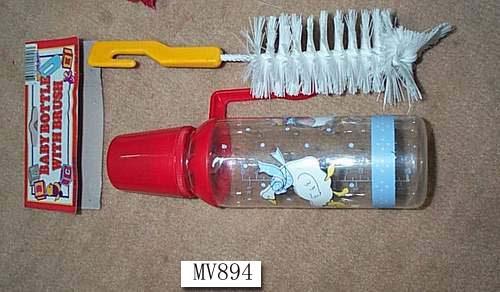
Separate artwork, barcode and product claims
Treat the artwork file as controlled product data. Include the dieline version, print color references, logo files, approved languages, warnings, care text, importer details where required and any market-specific claims. Assign one owner to consolidate changes and one approval version to prevent the printer from working from an earlier file.
The brand or buyer should identify the required product number and barcode format for its retail channel. GS1 US explains the role of UPC barcodes and GTINs; the specific identifier and placement still depend on the buyer’s channel and destination requirements. Check a printed proof with the intended scanner and verify that the number resolves to the correct variant. Do not reuse one code across distinct products merely because their packs look similar.
A product claim belongs on the pack only when it is accurate for the exact item and supported for the intended market and use. For example, a dishwasher-safe, heat-resistance or food-contact claim should not be copied from a similar product without product-specific evidence. Review the applicable destination-market rules with a qualified local adviser when claims or labeling obligations are uncertain. For EU-bound packs, the European Commission’s packaging-waste overview is a starting point for current packaging policy, not a substitute for checking the rules that apply to the particular product and placement date.
Specify the shipping carton separately
The master carton is another controlled specification. Record the number of retail units per inner pack and master carton, packing orientation, separator or void-fill arrangement, carton closure, exterior identification and gross weight once measured. If the order mixes variants, state whether mixed cartons are permitted and how each is labeled. Do not derive carton dimensions or weights from catalog images.
Agree a handling or distribution test plan based on the actual route and risk. ISTA’s test-procedure directory describes protocols used to evaluate packaged products in distribution; selecting a protocol and acceptance criteria is a project decision. An ISTA reference in a brief does not mean a Marketvalue SKU has passed a test, or that every shipment requires the same procedure. A simple trial pack can uncover movement or edge contact before a formal program is specified, but it cannot be presented as a certified test.
Ask the supplier to photograph one correctly packed retail unit, an open inner carton and a full master carton. These images support repeatable packing instructions and help the buyer compare a later production sample with the approved configuration.
Approve the proof in stages
Keep approval decisions separate so a graphics sign-off is not mistaken for a physical pack-out approval:
- Structural prototype: Confirm fit, closure, product retention, opening method and a provisional shipping arrangement. Record revisions to the dieline.
- Artwork proof: Check language, logo, print positions, barcode and item-specific claims against the approved copy. Record the file name and revision.
- Packed sample: Inspect an assembled retail unit and at least one representative inner and master carton. Check product count, orientation and protection after the agreed handling checks.
- Production reference: Retain a labeled sample and a written specification. State whether any action remains open before packing begins.
If the product changes, recheck the pack. A revised handle, added accessory or changed blade guard may alter fit, weight or label text. If the packaging changes, decide whether new artwork, a new barcode check or another packed-sample review is needed. The sample approval guide covers how to record the final physical decision.
Copy-ready packaging brief
Send a concise, versioned brief when asking for a quotation or prototype:
| Field | Buyer input |
|---|---|
| Product | Exact SKU or project code; current specification and component list |
| Market and channel | Destination country, retailer or distributor, shelf/peg/online presentation |
| Unit pack | Preferred format, structure, opening, orientation and product retention |
| Graphics | Dieline, logo, language, claims, care copy and approval owner |
| Identification | Buyer-assigned item code, GTIN/barcode requirement and placement |
| Protection | Product-specific guards, separators, insert or wrap requirements |
| Cartons | Units per inner/master carton, orientation and required carton marks |
| Review | Prototype, print proof, packed sample, test plan and sign-off criteria |
| Open questions | Supplier assumptions, alternatives and items awaiting evidence |
For a project using an existing SKU as a starting point, see Marketvalue’s OEM/ODM service and request a wholesale quote with the product code, destination channel and packaging brief. Confirm current specifications, customization scope, minimum order quantity, price and timing for the exact proposal.
FAQ
Is a color-box image enough to approve the packaging?
No. It may show a product direction, but the buyer still needs the actual pack structure, dieline, artwork revision, packed sample and carton configuration. The retail image cannot establish internal protection or transit performance.
Who should provide the barcode for private-label kitchenware?
The brand or buyer should define the item identifier and the retailer’s barcode requirements. The supplier can place the approved code on artwork, but the buyer should verify ownership, product mapping and scan performance for each variant.
Does approving the print proof approve the master carton?
No. A print proof addresses graphics. The master carton needs its own unit count, arrangement, closure, marking and protection review. Record both decisions so a change to one does not silently approve the other.
Is an ISTA test required for every kitchenware order?
Not automatically. The buyer and supplier should agree the distribution risks, relevant protocol if one is used, acceptance criteria and who performs the test. Never describe an untested SKU as ISTA certified.